Cost & Sizing
How Much Does It Cost to Spray Foam a Pole Barn or Shop in Flagstaff? A Size-by-Size Breakdown
“How much does it cost to spray foam a 30x40 shop?” is one of the most common questions we field from Flagstaff and Coconino County property owners planning a pole barn, workshop, or metal building. There isn’t one number that fits every project, but there is a predictable range once you know the size and a handful of variables. Here’s how the math actually works.
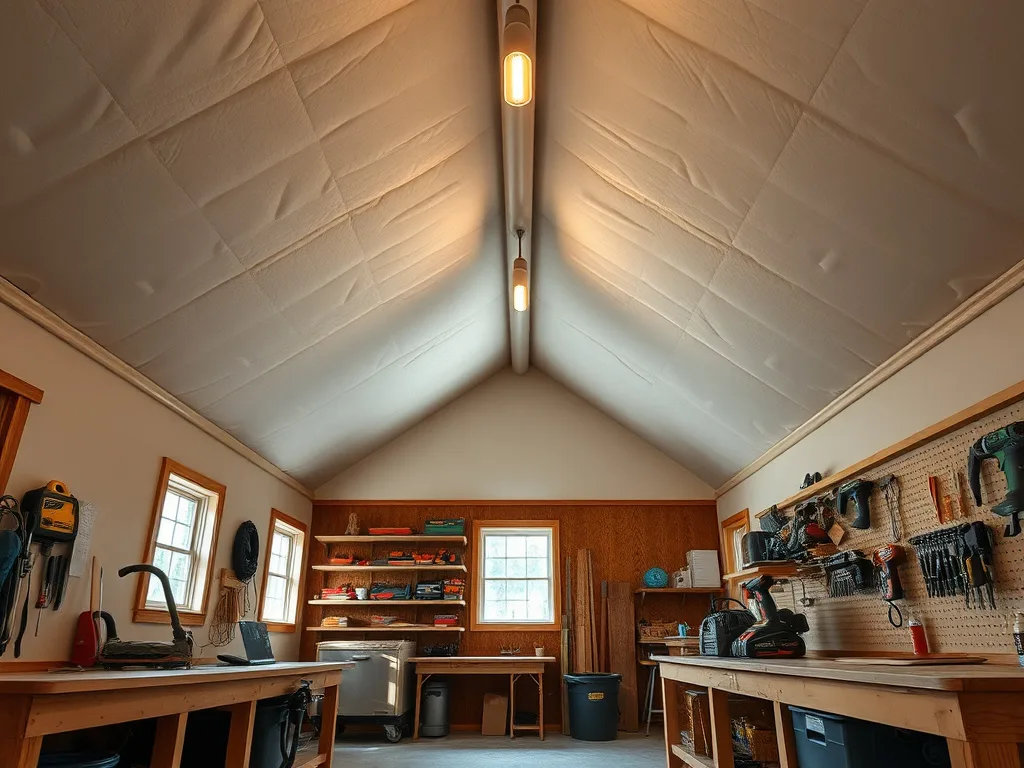
Why there’s no single price for “a pole barn”
Spray foam is priced by the square foot of surface area sprayed and the thickness applied, not by the footprint of the building alone. A 30x40 shop with a 12-foot wall height and a steep roof pitch has meaningfully more surface area to cover than the same footprint with 8-foot walls and a shallow pitch. That’s the biggest reason two “30x40 shops” can land in different price brackets even before foam type or R-value target enters the picture.
The estimates below are typical ranges for walls-and-ceiling coverage on pole barns, shops, and metal buildings in our service area — they assume a standard eave height and roof pitch. Every project still gets a free on-site walkthrough before a firm number, because roof complexity, existing framing, and access all move the final quote.
Size-by-size cost ranges
| Structure Size | Approx. Envelope Area | Typical Cost Range |
|---|---|---|
| 30x40 shop / pole barn | ~2,600–3,000 sq ft | ~$3,200–$6,000 |
| 30x50 shop / pole barn | ~3,100–3,700 sq ft | ~$3,900–$7,400 |
| 40x60 shop / metal building | ~4,400–5,200 sq ft | ~$5,500–$10,400 |
| 1,000 sq ft footprint (est.) | ~2,100–2,500 sq ft | ~$2,600–$5,000 |
Ranges reflect a blend of open-cell and closed-cell applications at moderate thickness for wall and ceiling coverage. They are planning estimates, not quotes — get a firm number with a free on-site visit.
What pushes the price up
- Roof pitch and eave height. Steeper pitches and taller walls mean more surface area for the same footprint — and often more staging and lift time.
- Foam type. Closed-cell spray foam costs more per board foot than open-cell, but delivers a higher R-value per inch, adds rigidity to the structure, and includes some vapor-retarding properties — often the right call for metal buildings and anywhere moisture control matters.
- R-value target. Chasing a higher R-value means more inches of foam, which scales cost roughly with thickness.
- Accessibility. Tight interior clearances, existing loft framing, stored equipment that has to be worked around, or difficult site access for the spray rig all add labor time.
- Ceiling vs. roofline coverage. Insulating the roofline (creating a conditioned attic/loft space) generally costs more than insulating a flat ceiling plane, because there’s more area and more overhead work.
What can bring the price down
Spraying walls only (and leaving the roof/ceiling for a later phase) reduces the scope and the bill. Open-cell foam at a moderate R-value target costs less per square foot than closed-cell at a high R-value target. And straightforward, easy-access buildings with simple rooflines spray faster than buildings with lots of obstructions, trusses, or add-ons to work around. During your walkthrough, we’ll walk through these trade-offs with you so the scope matches your budget and how you actually plan to use the space.
Metal buildings vs. wood-framed pole barns
Metal buildings and wood-framed pole barns spray a little differently. Metal panel walls are typically sprayed directly against the girts and panel interior, while wood-framed pole barns have stud bays that behave more like conventional wall cavities. Metal buildings in Flagstaff also carry a condensation risk on the interior of cold steel panels that wood framing doesn’t have in the same way — closed-cell foam’s air-sealing and moisture performance is usually the better fit there. For more on that specific issue, see our post on condensation and corrosion control in metal buildings.
Does timing affect the price?
It can. Spray foam contractors in our area, like most seasonal-weather trades, tend to see demand bunch up in the busier spring and fall building months, while the depth of winter and the peak of summer are often quieter on the scheduling side. Booking your project during a slower stretch on the calendar can mean a faster start date and more flexibility on scheduling, even if the material and labor cost itself doesn’t change much by season. The bigger timing lever for cost is booking before your build is already closed in — spraying open wall and roof cavities during construction is more efficient than any retrofit scenario, regardless of time of year.
Get a number specific to your building
The ranges above are a starting point for budgeting — they’re not a substitute for a real quote. Every shop, barn, and metal building we insulate in the Flagstaff area gets a free on-site walkthrough where we measure the actual envelope, talk through foam type and R-value goals, and give you a firm, itemized number before any work starts.
Want an exact number for your shop or barn?
Get a free, no-obligation quote based on your building’s actual dimensions, roof pitch, and R-value goals.