Building Science
Condensation & Corrosion Control in Metal Buildings: Why Flagstaff's Freeze-Thaw Climate Demands Spray Foam
If you’ve ever walked into a heated metal shop or barn on a cold Flagstaff morning and found water beaded on the inside of the wall panels — or dripping onto whatever’s stored underneath — you’ve seen condensation happening in real time. It’s one of the most common and most damaging problems in uninsulated or under-insulated metal buildings at our elevation, and it’s almost entirely preventable.
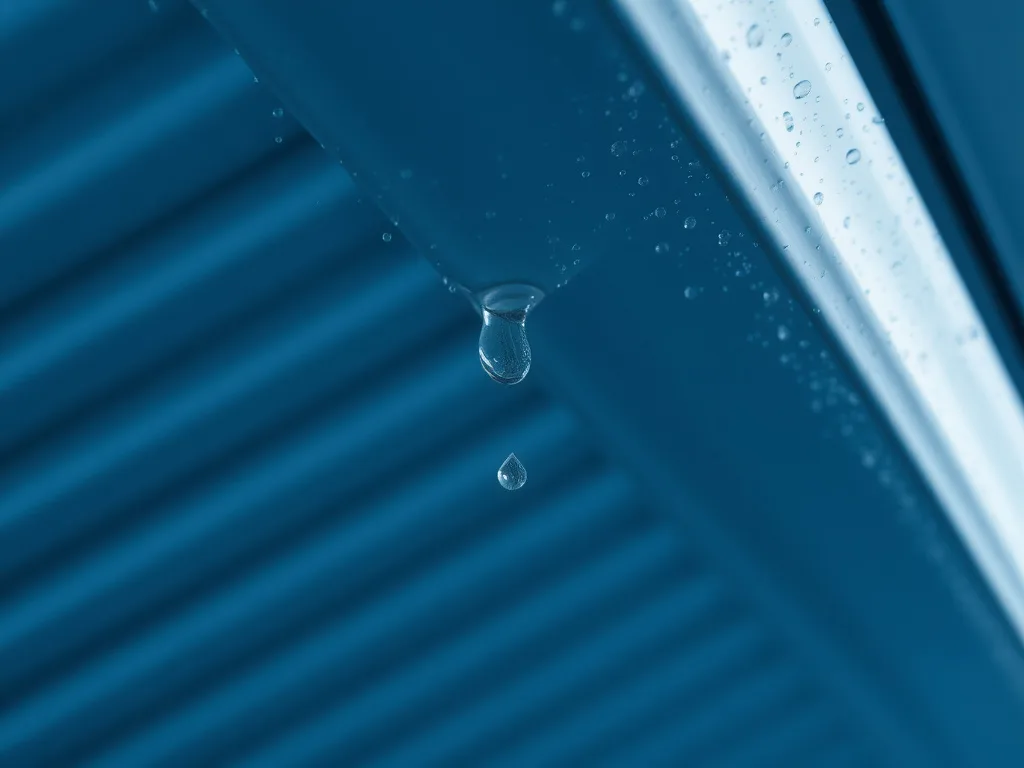
Why bare metal panels sweat
Steel is a highly conductive material — it transfers heat and cold almost instantly. When you heat the inside of a metal shop or barn, the interior air holds warm, moisture-laden air. That air comes into contact with the bare steel panel, which is being cooled from the outside by the exterior air temperature. Because steel has essentially no insulating value of its own, the interior panel surface tracks close to the outdoor temperature rather than the indoor one.
When warm, humid interior air touches that cold panel surface, it hits its dew point and the moisture condenses directly on the steel. This is basic building physics, not a defect in the building — but at Flagstaff’s elevation, with routine winter nights well below freezing and a heated interior above them, the temperature differential across that thin steel skin is large and the condensation problem is more severe than it would be at lower, milder elevations.
Freeze-thaw cycling makes it worse, not just uncomfortable
A single condensation event is a nuisance. Repeated freeze-thaw cycling over an entire winter season is what actually causes damage. Moisture that condenses on interior panels during the day can freeze overnight as temperatures drop, then thaw again the next time the building is heated. That cycle repeats dozens of times across a Flagstaff winter, and each cycle is a fresh opportunity for water to work into seams, fastener penetrations, and any exposed raw edges in the panel system.
Freeze-thaw cycling is exactly what drives so much of the region’s general building deterioration — it’s the same mechanism that cracks pavement and stresses masonry — and an uninsulated metal building’s interior skin is directly exposed to it every winter it goes without a thermal break.
Corrosion, thermal bridging, and what’s actually at stake
- Corrosion at fasteners and seams. Standing or repeatedly-cycling moisture at screw penetrations and panel laps accelerates rust, especially where the factory coating has been broken during installation.
- Damage to stored contents. Equipment, vehicles, tools, feed, and finished goods stored against or near uninsulated walls take on rust and moisture damage from constant drip and humidity.
- Thermal bridging at the structural frame. Steel girts and purlins conduct cold straight through the wall assembly, creating cold stripes on the interior where condensation concentrates even more heavily than on the panel field.
- Wood-framed interior elements at risk. Any wood blocking, loft framing, or interior finish work in contact with a sweating panel is exposed to sustained moisture, which is a mold and rot risk over time.
Why spray foam addresses the actual cause
Fiberglass batts or rolled insulation can slow heat transfer, but they don’t stop air movement, and they don’t bond to the irregular ribbed profile of a metal panel. Gaps behind batts still let warm interior air reach the cold steel, so condensation can keep forming behind the insulation where you can’t see it — often the worst version of this problem, because it goes unnoticed until rust or rot is already advanced.
Closed-cell spray polyurethane foam is applied directly to the panel interior and expands to fill the ribbed profile completely, creating a continuous air seal with no gaps for interior moisture to reach the steel. It also acts as a vapor retarder at sufficient thickness, which keeps interior humidity from migrating into the wall assembly in the first place. And because it’s adhered and rigid rather than fibrous, it doesn’t sag, settle, or leave voids over time the way batt insulation can in a metal building’s wall cavity.
The result is a panel interior that stays close to the conditioned indoor temperature instead of tracking the outdoor cold, which removes the temperature differential that causes condensation in the first place — addressing the cause, not just insulating around the symptom.
Not the same issue as roof ice damming
It’s worth being clear about scope: this is a wall-and-panel condensation issue inside metal outbuildings, distinct from roof ice-damming on residential roofs — a different problem with a different mechanism entirely. If you’re dealing with the panel-sweating and corrosion issue described here, spray foam on the building envelope is the direct fix. For general metal and steel building insulation specs and R-value guidance, see our Metal Building & Steel Building Insulation page.
What to look for before it’s a bigger repair
If you’re seeing rust streaks below fasteners, dripping panels on cold mornings, musty smells near interior wood framing, or visible rust bloom at panel seams, the building is already telling you it needs an air seal, not just a heat source running harder. Catching it early — before corrosion perforates a panel or rot sets into framing — is considerably cheaper than replacing damaged material later.
See condensation on your metal building’s walls?
We’ll walk your building, identify where the moisture is coming from, and give you a straightforward, itemized quote to seal and insulate it correctly.