Pole Barn, Barndominium & Shop Spray Foam Insulation
Whether the building is becoming a full-time barndominium, a heated workshop, or a barn that has to keep animals and equipment protected through Flagstaff's winters, the envelope has to work harder than a house wall does. Closed-cell and open-cell spray foam seal directly to post-frame construction — roof purlins, wall girts, and metal or wood skin — so the building holds a stable temperature instead of tracking the temperature outside it.
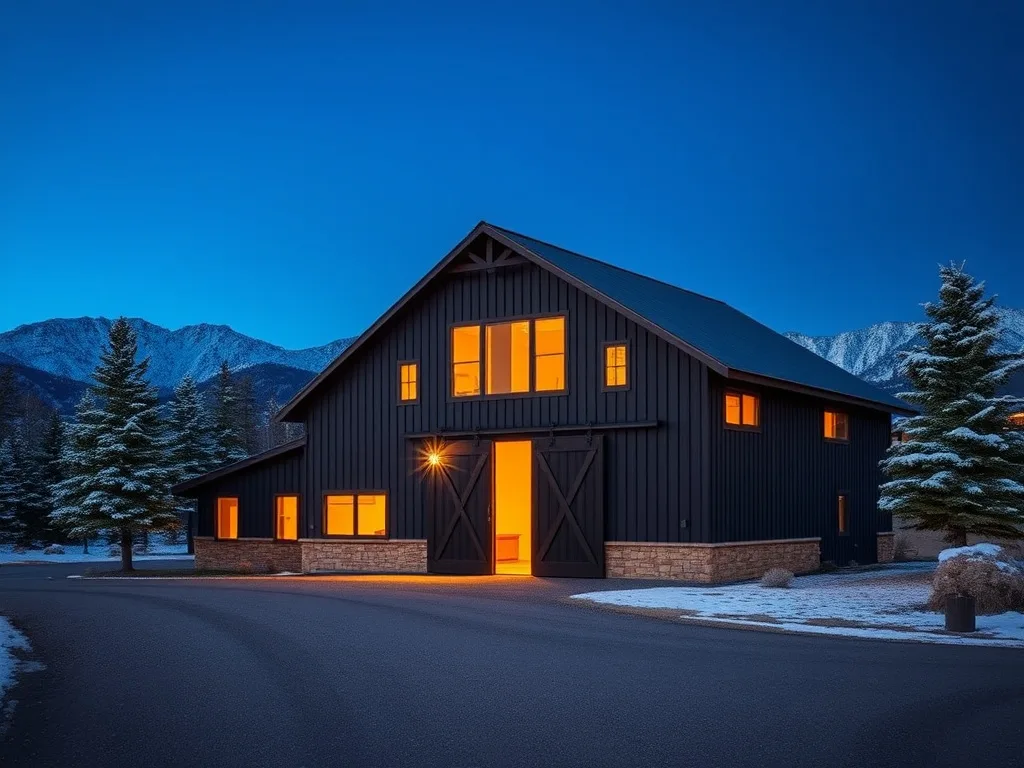
Post-Frame Construction Needs a Different Insulation Approach
A pole barn or post-frame shop doesn't have a standard stick-framed wall cavity — it has girts, purlins, and a metal or wood skin stretched across posts spaced several feet apart. Batt insulation was designed for 16-inch stick framing, not that layout, and it leaves gaps at every girt, corner, and penetration. Spray foam is applied directly to the underside of the roof and the inside face of the wall skin, so it follows the actual shape of the building instead of needing a cavity built to fit it. That single application step air-seals and insulates at the same time, which matters most in a structure that's exposed on all sides the way a pole barn is.
It also solves the condensation problem that shows up on the underside of metal roofing and siding once the building is heated or cooled even part of the year — warm interior air hitting a cold metal surface produces moisture that drips onto stored equipment, hay, or a finished ceiling. A continuous foam layer keeps that interior surface above the dew point so condensation doesn't form in the first place.
Barndominium Comfort — Making a Shell Livable
A barndominium is only as comfortable as its envelope. Without a continuous air and thermal barrier, the living quarters inside a post-frame shell will run cold along the exterior walls in winter, hot under the roof in summer, and noisy every time the wind picks up. Spray foam closes the gaps that batt insulation leaves at the top and bottom plates, around windows and doors, and at every wall-to-roof transition, which is where most of the drafts and temperature swings in a converted pole barn come from.
Because it's sprayed directly to the roof deck, a barndominium built with an unvented, conditioned attic can bring HVAC equipment and ductwork inside the thermal envelope instead of running it through an unconditioned space — one less place for the system to lose efficiency, and one less source of temperature stratification between floors.
Stable Shop Temperatures for Real Work
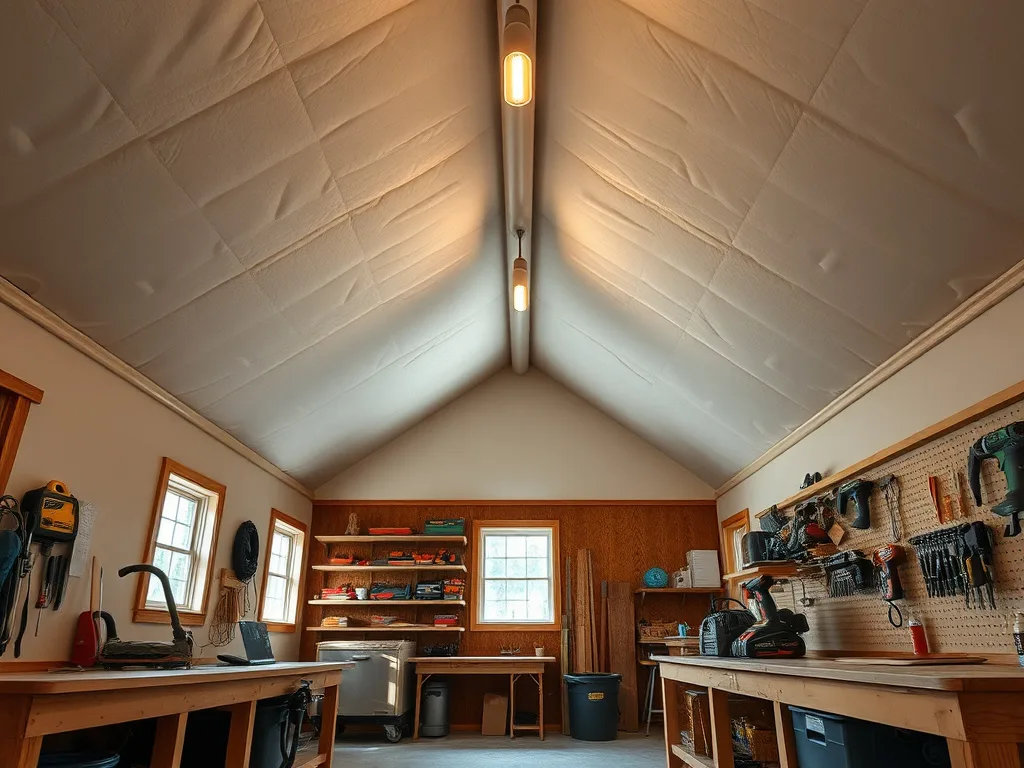
A working shop needs a temperature range that doesn't swing 40 degrees between a January morning and an afternoon with the doors closed and a heater running. Glues, finishes, adhesives, paint, and powder coating all have working-temperature windows, and equipment condensation on cold metal surfaces causes rust on tools and stock. Spray foam holds shop temperatures in a usable range on far less heating and cooling capacity than an uninsulated or batt-insulated post-frame building needs.
Closed-cell foam also adds rigidity to metal wall panels, which cuts down on the oil-canning noise and vibration that an unlined metal shop tends to produce every time a door slams or the wind gusts — a smaller benefit, but a real one for anyone spending long hours inside.
Livestock & Equipment Protection
Barns that aren't living space still benefit from the same envelope work. Livestock does better in a barn that isn't swinging between freezing overnight temperatures and a sun-heated interior by midday, and hay, feed, and equipment stored inside stay drier when condensation isn't forming and dripping off the underside of the roof. Spray foam is also a dense, adhered material rather than a loose fiber batt, which gives rodents far less to nest in or chew through compared to fiberglass — closed-cell foam in particular is dense enough that pests have little reason to burrow into it.
For equipment and vehicle storage, the goal is usually corrosion and condensation control rather than a fully conditioned space — a continuous foam layer on the roof and upper walls does most of that work without needing to insulate and condition the entire building the way a barndominium or shop would.
Open-Cell or Closed-Cell — Which Fits Your Building?
Closed-cell spray foam runs roughly R-6 to R-7 per inch, adds structural rigidity to wall and roof panels, and acts as its own vapor retarder — the standard choice for metal-skinned pole barns, barndominiums, and any building where condensation control and panel stiffness both matter. Open-cell foam runs closer to R-3.5 to R-4 per inch, costs less per board foot, and works well on interior partition walls or in applications where sound-dampening matters more than vapor control, such as separating a barndominium's living space from an unheated portion of the same building.
Most pole barn and shop projects use closed-cell on the roof deck and exterior walls — where condensation control and rigidity matter most — and reserve open-cell for interior partitions where it isn't doing double duty as a vapor barrier. We'll walk through both options against your building's use, target R-value, and budget during the quote.
What It Costs by Building Size
Pricing scales with square footage, foam type, and roof pitch, but as a starting point: closed-cell spray foam typically runs about $1.50–$3.50 per board foot installed, and open-cell runs about $0.90–$1.50 per board foot. A 30x40 shop, a 30x50 pole barn, and a 40x60 building all land at different total costs once you factor in wall height, ceiling area, and whether both walls and roof are being sprayed or just the roof deck.
- 30x40 shop or pole barn — roof-and-wall spray, closed-cell recommended
- 30x50 shop or metal building — larger roof area drives most of the cost
- 40x60 shop, pole barn, or metal building — commercial-scale project, priced per board foot
For exact numbers on your building's footprint, wall height, and foam type, use the spray foam cost calculator or see how spray foam compares to fiberglass and other options on the cost comparison page.
Our Process
- 1. Site visit & measurement. We walk the building, measure roof and wall area, and note framing type, current use, and intended use — barndominium, shop, or barn.
- 2. Foam type & R-value recommendation. Open-cell, closed-cell, or a combination, sized to your target R-value and budget.
- 3. Installation. Roof deck, walls, or both, sprayed to spec with attention to penetrations, transitions, and any area that needs a fire- or ignition-barrier layer.
- 4. Walk-through. We review the finished install with you before we consider the job done.
Common Questions
Is spray foam insulation good for pole barns?
Yes — it's one of the few insulation types that adheres directly to post-frame construction without needing a stick-framed cavity, and it handles the condensation control that metal-skinned buildings need.
What's the best insulation for a pole barn or shop?
Closed-cell spray foam on the roof and walls is generally the best-performing option for condensation control and rigidity. Open-cell is a lower-cost option for interior partitions or less demanding applications.
How much would it cost to spray foam a 30x40 pole barn?
It depends on wall height, roof pitch, and foam type — use the cost calculator for a range specific to your building, or request a quote for exact pricing.
Do mice or pests chew through closed-cell spray foam?
Closed-cell foam is dense and rigid once cured, which gives pests far less to burrow into than loose-fill or batt insulation, though no insulation material is a substitute for proper exclusion and sealing at doors, vents, and penetrations.
Ready to Insulate Your Pole Barn, Shop, or Barndominium?
Tell us about your building and we'll put together a spray foam plan and quote sized to how you're using it.
Or email josh@contractorschoiceagency.com