Commercial & Agricultural
Commercial & Agricultural Building Insulation in Flagstaff, AZ
Closed-cell spray foam for warehouses, ag and ranch structures, and light-commercial shells across Flagstaff and Coconino County — built for high-elevation freeze-thaw conditions, not desert heat.
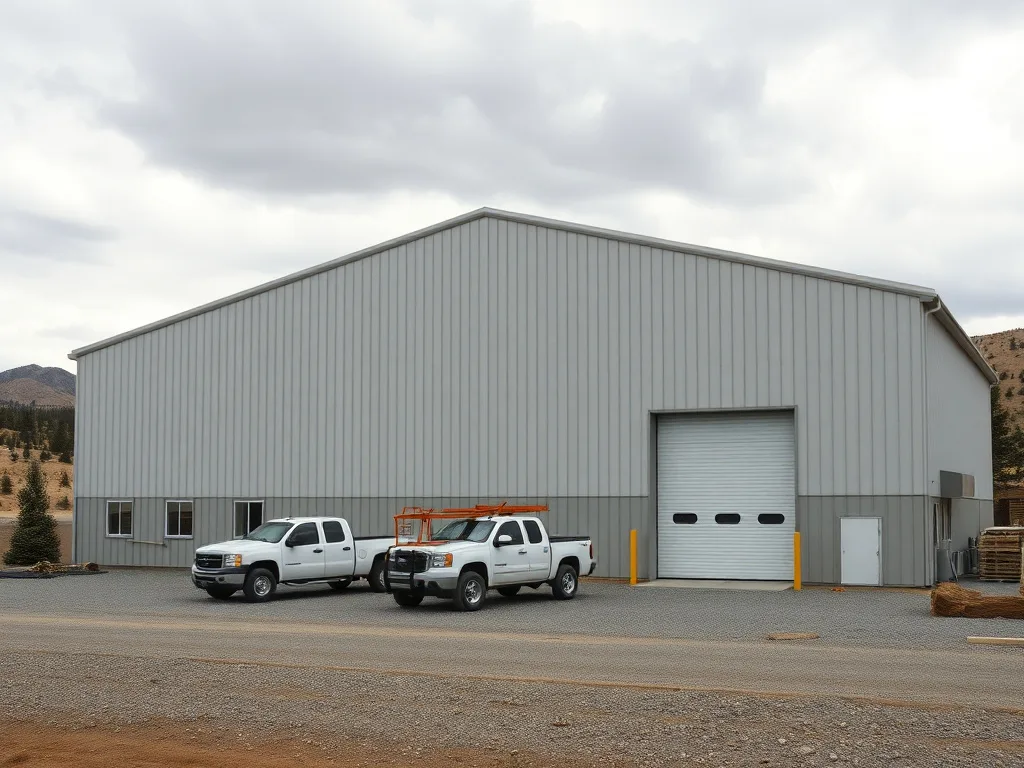
Built for Property Managers, GCs, and Ag Operators
Most insulation contractors in Flagstaff are set up for single-family homes. Commercial and agricultural buildings are a different job — larger spans, metal or pre-engineered shells, occupied-business scheduling, and a bottom line that depends on controlling energy cost and interior moisture at scale. This is a core service line for us, not a side job we squeeze in between residential retrofits.
Whether you're a property manager sourcing a contractor for a warehouse tenant improvement, a GC specifying insulation on a light-commercial build, or a ranch or ag operator insulating a barn or equipment building, we scope the job to your structure, your timeline, and your budget.
That means a formal walk-through before we quote, a written scope that spells out exactly which surfaces get insulated and to what R-value, and a crew that shows up ready to work around your operation instead of asking you to work around them. For multi-building ag properties or campus-style commercial sites, we can also phase the work building by building so the whole property isn't out of commission at once.
Flagstaff's Elevation Is a Condensation Problem, Not a Heat Problem
At roughly 7,000 feet, Flagstaff sees sharp day-to-night temperature swings and a real freeze-thaw cycle for most of the year. When a heated warehouse, shop, or ag building meets cold metal panels or a steel roof deck, moisture in the interior air condenses on the inside of that cold surface. Over time that means dripping onto inventory, equipment, or stored feed, plus corrosion at fasteners and panel seams.
That's a different problem than the desert-heat framing most statewide insulation content is written for. Closed-cell spray foam adheres directly to the underside of metal panels and steel decking, forming a continuous air and vapor barrier that stops condensation at the surface instead of trying to manage it after it forms.
Left unaddressed, that condensation cycle doesn't stay cosmetic. Repeated wetting and drying at fastener heads and panel seams accelerates corrosion on the building shell, and moisture dripping from a cold roof deck onto stored inventory, feed, or equipment turns a building envelope issue into an operational one. Solving it at the source with a continuous spray foam envelope is generally more effective — and less disruptive over the building's life — than retrofitting dehumidification or ventilation after the fact.

Building Types We Insulate
Warehouses & Storage Buildings
Distribution, storage, and light-industrial shells where a stable interior envelope protects inventory and cuts heating and cooling load year-round.
Ag, Ranch & Farm Structures
Barns, equipment buildings, feed storage, and outbuildings across Coconino County ranch and ag operations.
Light-Commercial Shells
Retail build-outs, offices, and flex space built inside metal or steel shells that need a finished, climate-controlled interior.
Cold Storage & Climate-Sensitive Space
Buildings holding inventory, equipment, or materials that can't tolerate temperature swings or condensation drip.
Ranch Outbuildings & Equipment Shops
Standalone shops and equipment buildings on working ranch or ag property, insulated to the same standard as the main structure.
Tenant Improvements & Leased Space
Spray foam scoped and scheduled to fit a tenant build-out timeline, coordinated directly with property managers and GCs.
Why Closed-Cell Spray Foam for Commercial & Ag Structures
- Higher R-value per inch — more thermal performance without adding depth to wall or roof assemblies, which matters on pre-engineered metal buildings with tight framing cavities.
- Adds structural rigidity — closed-cell foam bonds to metal panels and steel decking, adding stiffness to large open spans that batt or blown-in insulation doesn't provide.
- One continuous air seal — reduces heating and cooling load by closing the gaps, penetrations, and seams that drive utility cost up in large commercial and ag structures.
- Built-in vapor barrier — no separate vapor membrane needed, which simplifies install on irregular ag-building framing.
- Doesn't settle or sag — unlike batt insulation over large ceiling or wall spans, spray foam holds its R-value for the life of the building.
Scheduled Around Your Operation
Occupied warehouses, working ranches, and active job sites can't stop for an insulation crew. We scope commercial and ag jobs in phases where needed, work around business hours, livestock, or harvest schedules, and coordinate directly with GCs and property managers on access, sequencing, and site protection.
For new commercial builds, we work off the framing and MEP schedule the same way we would on a new-construction home. For existing buildings — a warehouse tenant improvement, a barn getting a new equipment bay, a shop that never got insulated properly — we assess the structure first and give you a scope that fits the building as it stands.
On active ag properties we plan around livestock and seasonal schedules — spraying an equipment barn during a slower stretch of the calendar rather than mid-harvest, for example. On commercial sites, that usually means after-hours or weekend crews, staged material delivery so the site stays clear for other trades, and a single point of contact for the property manager or GC handling the rest of the build.
What Drives Cost on a Commercial or Ag Job
Commercial and ag insulation cost scales with square footage, ceiling and roof height, roof pitch, whether you're insulating walls, roof deck, or both, and whether we're working around existing occupancy or business operations. Open-cell vs. closed-cell foam and site accessibility also move the number.
For real dollar ranges by structure size, see the spray foam cost calculator, or compare spray foam against fiberglass and other insulation types on the spray foam vs. traditional insulation page.
Commercial & Ag Insulation Questions
Is spray foam a good fit for agricultural building insulation?
Yes. Closed-cell spray foam handles the irregular framing common in barns and equipment buildings, adds structural stiffness to metal panels, and controls the interior condensation that damages stored feed, equipment, and materials.
Does warehouse insulation actually reduce heating and cooling cost?
A continuous spray foam air seal on the walls and roof deck reduces the air leakage that drives up heating and cooling load in large commercial spaces — the bigger the building, the more that continuous seal matters.
Do mice or pests chew through closed-cell spray foam?
Closed-cell spray foam is dense and rigid once cured, which makes it far more resistant to pest intrusion than fiberglass batt or loose-fill insulation — a real factor in ag buildings and barns.
Get a Quote for Your Commercial or Ag Building
Tell us about your warehouse, ag structure, or light-commercial project and we'll put together a scope and quote built around your building and timeline.