Spray Foam vs. Fiberglass vs. Cellulose: The Real Cost & ROI Comparison for Flagstaff New Builds, Shops & Metal Buildings
Published July 20, 2026 · Flagstaff Spray Foam · Cost & ROI
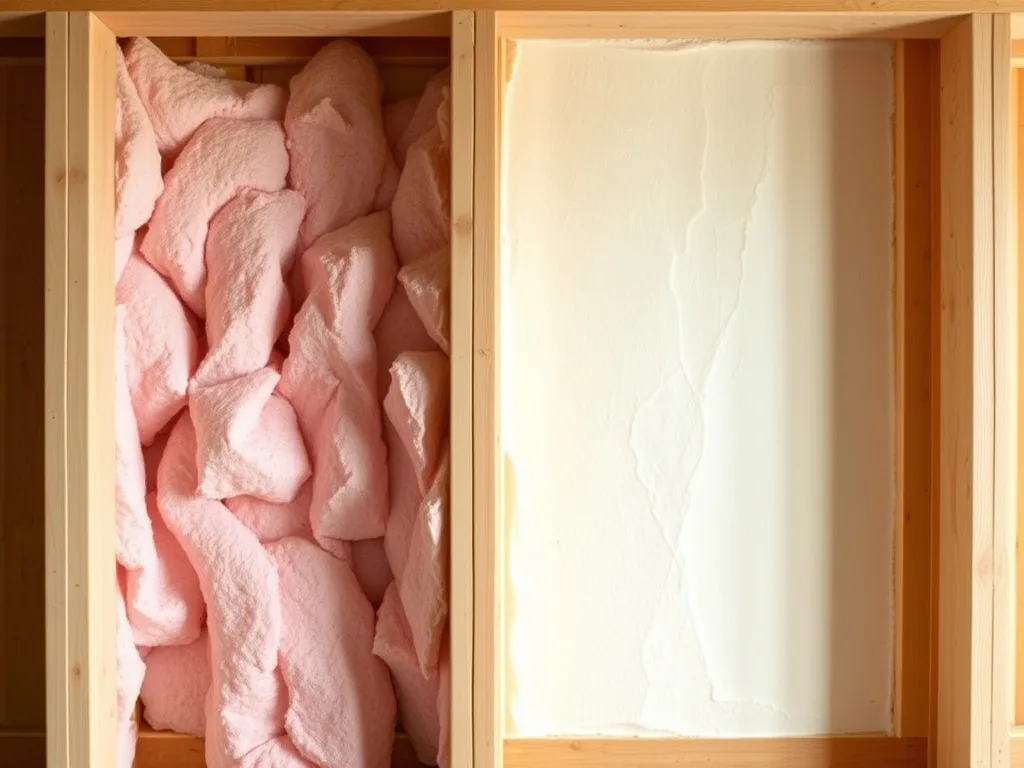
Every builder, GC, and property owner who calls us in Flagstaff eventually asks some version of the same question: is spray foam actually worth the extra money, or am I better off spending less upfront on fiberglass or cellulose and banking the difference? It is a fair question, and it deserves a real answer with real numbers attached to it — not a sales pitch that skips straight to “energy savings” without ever showing the math.
This guide walks through what spray foam, fiberglass, and cellulose actually cost per square foot and per board foot, how those costs shift once you move from a standard new-construction home to a pole barn, a metal building, a shop, or a commercial shell, and how to work out your own payback period instead of taking anyone’s word for it. If you want a quick number for your own project, our spray foam cost calculator does the arithmetic for you; this article is the reasoning behind it.
Why This Comparison Looks Different for New Builds, Shops & Metal Buildings
Most spray-foam-vs-fiberglass content on the internet is written for someone retrofitting an attic in an existing house. That is a different project with different math: small surface area, easy access, and a homeowner comparing a weekend DIY fiberglass job against hiring a spray foam crew for one room.
New construction, pole barns, metal buildings, shops, and commercial shells are a different animal entirely. You are insulating a large, open envelope — often before drywall or interior finish exists — and the decision gets made once, at framing or shell-erection stage, for the life of the building. Get it wrong and you are not repainting a bedroom; you are tearing out insulation in a 3,600-square-foot shop or re-doing a metal building roof panel from a lift. That is exactly why the cost/ROI math matters more here than it does for a single attic, and why we built this comparison around the structure types builders and property owners in Flagstaff and Coconino County actually work on.
The Three Materials, Side by Side
Before the dollar figures, it helps to know what you are actually paying for. Here is how the three materials most commonly specified on new-build and outbuilding projects stack up on the traits that drive both performance and cost.
| Material | R-value per inch (approx.) | Air sealing | Moisture resistance | Adds structural rigidity |
|---|---|---|---|---|
| Closed-cell spray foam | ~R-6 to R-7 | Excellent — expands and seals gaps | Excellent, acts as a vapor barrier | Yes |
| Fiberglass batts | ~R-3.2 to R-3.8 | Poor — relies on separate air sealing | Poor if it gets wet or compressed | No |
| Blown-in cellulose | ~R-3.2 to R-3.8 | Fair — better than batts, still gaps at penetrations | Poor if it gets wet, can settle over time | No |
The R-value-per-inch gap is the whole story on performance: closed-cell spray foam delivers roughly double the R-value of fiberglass or cellulose in the same cavity depth, plus it air-seals and adds rack strength to the structure at the same time. That is exactly why spray foam shows up so often on metal buildings and pole barns specifically — those structures have thinner wall assemblies and more air leakage paths (screw penetrations, wall-to-roof transitions, purlins) than a conventionally framed house, so air sealing does more work per dollar there than in a typical stick-built wall.
What Each Material Actually Costs
Material cost is where most comparisons get vague. Here are real, disclosed ranges from the Flagstaff market:
- Closed-cell spray foam: roughly $2.50–$4.00 per square foot installed for a standard application, or $1.50–$3.00 per board foot (one board foot = one square foot covered one inch thick) for jobs quoted by depth, which is common on larger shell-only projects like pole barns and metal buildings.
- Fiberglass batts: roughly $0.75–$1.50 per square foot installed.
- Blown-in cellulose: roughly $1.00–$2.00 per square foot installed.
Because spray foam is priced by depth as much as by area, thickness is the lever that moves your total cost the most. A thin, code-minimum closed-cell pass on a garage ceiling and a thick, high-R roof-deck application on a metal building shell are both “spray foam,” but they land in very different places on that $1.50–$3.00-per-board-foot range once you multiply by inches of depth. As a rule of thumb, cost scales close to linearly with thickness before labor and accessibility factors are added — doubling the depth roughly doubles the material cost per square foot. That is the single biggest reason two contractors can quote wildly different numbers for what sounds like “the same job”: one is pricing a 2-inch pass, the other a 4-inch pass to hit a higher R-value target.
Cost by Structure Type
Applying those per-square-foot rates to real project types is where the comparison gets useful. The ranges below are ballpark planning numbers based on typical envelope sizes for each structure — your actual total depends on wall height, roof pitch, how much of the envelope you are insulating (walls only vs. full envelope including roof deck), and site accessibility. Use these to sanity-check a quote, and run your exact dimensions through the cost calculator for a tighter number.
New-Build Home
A typical new-construction home insulates walls, roof deck or attic, and often a garage — call it 3,000–4,000 square feet of surface area for a 2,000–2,500-square-foot floor plan once you account for wall height and roof slope. At $2.50–$4.00/sq ft for closed-cell spray foam across the full envelope, that lands in roughly the $7,500–$16,000 range, against roughly $2,250–$6,000 for fiberglass batts or $3,000–$8,000 for blown cellulose over the same area. That is the raw material-cost gap builders are weighing when they decide whether to spec spray foam at framing stage — see our new construction spray foam page for the code-compliance and scheduling side of that decision.
Pole Barn or Shop (30×40 to 30×50)
A 30x40 pole barn or shop has roughly 1,200 square feet of floor and, once you count walls and roof deck, commonly 2,200–2,800 square feet of surface to insulate depending on wall height and whether the roof is included. At closed-cell rates, that is roughly $5,500–$11,000; fiberglass or cellulose on the same surface area runs roughly $1,650–$5,600. A 30x50 shop scales up proportionally — more square footage, same per-square-foot math. Accessibility is a bigger swing factor here than on a house: an open pole barn with exposed purlins and a steep roof pitch takes more labor time per square foot than a simple gable, which is why two 30x40 quotes can differ even when both contractors are using the same material rate.
Metal or Steel Building (30×50 to 40×60)
Metal buildings usually need a higher R-value target on the roof panel than a house does, because bare steel has almost no thermal mass and condensates fast against temperature swings — which pushes the spray foam application thicker (and therefore the $/board-foot math higher) than a comparable pole barn wall. On a 40x60 metal building, expect the insulated surface area to run well above 4,000 square feet once roof and walls are both included, which is why metal building quotes tend to land at the higher end of the ranges above, or above them, when the roof is sprayed at a thicker depth to control condensation. Fiberglass or rolled insulation is cheaper upfront on metal buildings but does not solve the condensation problem the way closed-cell foam does — more on that trade-off below, and in depth on our metal building insulation page.
Commercial & Agricultural Buildings
Commercial shells and ag buildings are the widest range of any category here, because “commercial” covers everything from a small warehouse bay to a large agricultural structure with tens of thousands of square feet of envelope. The per-square-foot rates above still apply, but total project cost scales with square footage fast enough that these projects are almost always quoted from an actual site walk rather than a rule-of-thumb calculation — get in touch through our commercial & ag insulation page for that kind of quote.
How to Run the Payback-Period Math Yourself
“Does spray foam pay for itself” is really two separate questions: does it pay for itself in energy savings alone, and does it pay for itself once you also count what fiberglass or cellulose would have cost you in callbacks, moisture issues, or lost usable space. The energy-savings side is the one you can actually calculate with your own numbers using a simple formula:
Payback period (years) = (Cost of spray foam − Cost of the alternative) ÷ Estimated annual energy savings
To make that concrete: suppose spray-foaming a 30x40 shop costs $9,000 and fiberglass batts on the same shop would have cost $3,500 — a $5,500 premium. If you heat that shop through the winter and estimate the tighter, higher-R envelope saves you $700 a year in propane or electric heat compared to what the fiberglass version would have cost to run, the payback period is $5,500 ÷ $700 ≈ 7.9 years. Change any input — a higher energy cost, a shop that runs a heater year-round instead of seasonally, a smaller cost premium because you are comparing against cellulose instead of fiberglass — and the payback period moves accordingly. That is the exercise worth doing with your own utility numbers before you decide, rather than accepting a generic “it pays for itself” claim at face value.
The honest answer is that payback period depends heavily on how much you actually heat or cool the space. A finished shop, heated barndominium, or climate-controlled commercial building that runs HVAC or heat most of the year sees a real, calculable energy return. An unheated storage barn that never runs climate control will never “pay back” on energy savings alone — for that kind of building, the case for spray foam rests on moisture and condensation control instead, not utility bills.
What the $/Sq Ft Number Doesn’t Tell You
A handful of factors that do not show up in a simple per-square-foot comparison change the real-world math, and they tend to favor spray foam more the larger and more exposed the structure is:
- One-and-done installation. Closed-cell foam is installed and inspected once. Fiberglass and cellulose are more prone to settling, compressing, or shifting over time in a pole barn or metal building that flexes with temperature swings, which can mean touch-up or partial re-installation down the road — a cost the sticker price does not capture.
- Condensation and corrosion avoidance on metal buildings. Bare metal panels sweat when warm, moist interior air hits a cold steel surface — a real issue at Flagstaff’s elevation and freeze-thaw swings. Left unaddressed, that moisture drives rust, wood rot on purlins, and mold. Closed-cell foam applied directly to the panel breaks that thermal bridge; fiberglass and rolled products do not adhere to the panel and can trap moisture behind them instead of stopping it.
- Structural contribution. Closed-cell spray foam adds meaningful rack strength to a wall or roof assembly. On a pole barn or metal building, that is value fiberglass and cellulose simply do not provide.
- Usable-space value. If the building is a shop, barndominium, or conversion project rather than pure storage, a properly air-sealed, moisture-managed envelope is what makes the space comfortable and usable year-round in the first place — which is a functional-value argument, not just an energy-bill argument.
- Code and inspection timing on new construction. Spec’ing spray foam at framing stage on a new build means one inspection and one install window, versus coordinating a separate air-sealing step to get fiberglass or cellulose assemblies to comparable performance.
Which Material Wins for Which Project
There is no single right answer — there is a right answer for your building and your budget. As a general pattern from the numbers above: fiberglass and cellulose make sense when upfront cost is the primary constraint and the structure is simple, conditioned lightly or not at all, and not exposed to the kind of moisture and condensation risk that comes with bare metal panels. Closed-cell spray foam earns its premium on metal buildings (condensation control), pole barns and shops you plan to heat, cool, or actually spend time in (air sealing plus R-value per inch), and new construction where you want the envelope done right once at framing stage. For a deeper structure-agnostic breakdown of the two approaches, see our spray foam vs. traditional insulation comparison page.
Common Questions
Is it cheaper to spray foam or install traditional insulation?
Upfront, traditional fiberglass or cellulose is almost always cheaper per square foot — typically $0.75–$2.00/sq ft installed versus $2.50–$4.00/sq ft for closed-cell spray foam. Whether that upfront savings holds up over the life of the building depends on how much you heat or cool the space and how exposed the structure is to condensation risk, which is why the payback-period math above matters more than the sticker price alone.
Does spray foam insulation actually pay for itself?
It can, on structures you actively heat or cool — a finished shop, a barndominium, a climate-controlled commercial space — where the higher R-value-per-inch and superior air sealing translate directly into lower utility bills. Run the payback formula above with your own square footage, cost premium, and energy costs rather than relying on a blanket claim; a raw storage building with no HVAC will not see the same return, because there is no energy bill to reduce in the first place.
What is the R-value of commercial-grade spray foam, and which type has the highest R-value?
Closed-cell spray foam, the type most commonly specified for commercial, metal building, and pole barn applications, runs roughly R-6 to R-7 per inch — close to double the R-3.2–R-3.8 per inch you get from fiberglass batts or blown cellulose in the same cavity depth. Closed-cell is the higher-R-value option of the two spray foam types (open-cell runs lower per inch but at a lower material cost), which is why it is the standard choice for metal buildings and outbuildings where wall assemblies are thinner and moisture control matters.
What are the real drawbacks of spray foam insulation?
The honest list: higher material cost per square foot than fiberglass or cellulose, it requires professional installation with proper ventilation during application, and because it is applied wet and expands in place, it is harder to remove or modify later than batt insulation if you need to run new wiring or plumbing through a cavity after the fact. None of those are reasons to avoid it — they are reasons to plan the install at the right stage of construction (framing, before the shell is closed up) and to work with a crew that installs it correctly the first time.
Is spray foam worth the extra cost for a pole barn or metal building specifically?
For any pole barn or metal building you plan to heat, cool, or use as finished space — a shop, a barndominium, a workshop with equipment sensitive to temperature swings — yes, the air-sealing and condensation-control benefits generally justify the premium over fiberglass. For a building used purely as unconditioned storage with no moisture concerns, a cheaper material may be the more rational call. The right way to decide is to price both options for your exact dimensions and run the payback math above against how you actually plan to use the building.
Get real numbers for your project
Run your dimensions through the spray foam cost calculator, compare approaches in more depth on the spray foam vs. traditional insulation page, or skip straight to a written quote for your new build, pole barn, shop, or metal building.