Removal & Replacement
Insulation Removal & Replacement in Flagstaff, AZ
Tear-out and re-spray for renovations, additions, and pole-barn or shop conversions where the existing insulation has failed, settled, or needs to be upgraded before the next phase of work.

When Removal & Replacement Makes Sense
Removal and replacement is a companion service, not a stand-alone comfort pitch. It comes up most often as part of a bigger project — a renovation, an addition, or a pole-barn-to-shop conversion — where the existing insulation needs to come out before the next phase of work can move forward.
It also comes up on its own when insulation that was installed years ago, or installed incorrectly by a previous contractor, is no longer doing its job. In either case the approach is the same: assess what's there, remove what needs to go, and install new insulation to current standards rather than layering new material over a problem that's still underneath it.
Renovations
Walls or ceilings opened up during a remodel expose old insulation that's easiest to replace while the framing is already accessible.
Additions
New square footage tying into an existing structure often means removing and re-matching insulation at the connection points.
Pole-Barn & Shop Conversions
Turning a pole barn or outbuilding into a finished shop or livable space usually means pulling out whatever thin or failed insulation is already there.
Failed or Settled Insulation
Batt that's sagged, blown-in that's compressed, or old spray foam that was applied incorrectly all lose R-value and need to come out.
Upgrading From Fiberglass
Property owners moving from fiberglass or cellulose to closed-cell spray foam for better air sealing and moisture control.
Moisture or Pest-Damaged Material
Insulation that's absorbed moisture or been compromised by rodents no longer performs and needs to be removed before it's replaced.
Signs Your Insulation Needs Replacing
- Visible moisture staining on framing, drywall, or the underside of a roof deck
- Batt insulation that's sagged, gapped, or fallen away from the framing
- Blown-in insulation that's compressed and lost noticeable depth
- Rooms that still swing hot or cold despite insulation being present
- Musty odors coming from wall or ceiling cavities
- Rodent nesting material or damage found once a wall or ceiling is opened up
- Old, thin, or builder-grade insulation exposed during a remodel or addition
The Removal Process
We start by assessing the structure — what's currently installed, how much of it needs to come out, and whether there's moisture or damage behind it. Finished areas outside the work zone get protected before any material moves. Old batt, blown-in, or failed spray foam is removed down to the framing or roof deck and hauled off site.
Once the cavity is open, we inspect the substrate for moisture damage, rot, or pest activity before anything new goes in. This step is what keeps a replacement job from just covering up a problem that's still there — the goal is a clean, dry surface ready for new insulation.
If we find framing damage, active moisture intrusion, or a repair that's outside the insulation scope, we flag it before moving forward rather than spraying over it. On renovation and addition jobs we coordinate that timing with your GC so removal happens at the right point in the schedule — after demo, before drywall or interior finishes go back up.
The Replacement Process
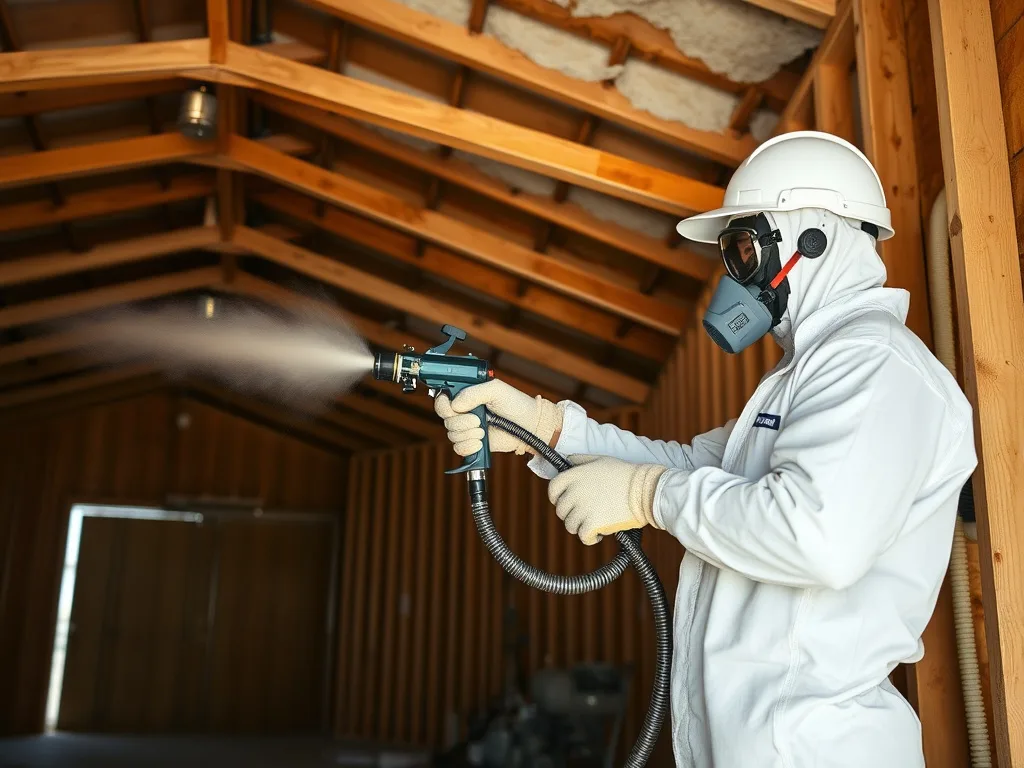
With the old material out and the substrate inspected, we apply new closed-cell or open-cell spray foam to code, sized to the R-value and application the project calls for. Because it's a continuous application rather than fitted batt sections, it fills gaps and irregular framing the old insulation never sealed in the first place.
Every replacement job is installed inspection-ready, the same standard we hold on new-construction work.
For pole-barn and shop conversions specifically, replacement is often the point where a structure goes from a bare metal or wood shell to a space that actually holds a set temperature — the same continuous-envelope approach we use on new builds, applied to a building that's changing purpose rather than starting from scratch.
A Companion Service to Your Next Project
Removal and replacement rarely stands alone — it's almost always paired with a bigger project. If you're planning an addition, see new construction spray foam insulation. Converting a pole barn or outbuilding into a finished shop or living space? Check pole barn, barndominium & shop insulation. Turning a garage into usable space is covered on the garage & outbuilding conversions page. We scope removal and replacement into any of those projects as one job rather than a separate visit.
What Drives Cost on a Removal & Replacement Job
Cost depends on how much material has to come out, what type it is, how it needs to be disposed of, and whether moisture or pest damage needs repair before new insulation goes in. Access — an open ceiling versus a tight crawl space or roof deck — also changes labor time, as does the square footage and type of new spray foam being installed.
For size-based cost ranges on the new-install side of a replacement job, see the spray foam cost calculator.
Removal & Replacement Questions
Can mold grow behind spray foam insulation?
Properly installed spray foam creates a continuous air and vapor barrier that prevents the moisture buildup mold needs to grow. Issues trace back to installation problems or moisture already trapped behind old material — which is exactly what the assessment step in a removal job is designed to catch before new foam goes in.
What time of year is insulation cheapest to replace?
Contractor scheduling tends to open up in the shoulder seasons between peak building periods. If your project timeline is flexible, ask us about current scheduling when you request a quote.
Is it cheaper to spray foam or install traditional insulation during a replacement?
Traditional batt or blown-in material typically costs less up front. Spray foam costs more per square foot but seals air leaks that batt and blown-in leave open, which is a factor worth weighing against your project's timeline and budget — see the spray foam vs. traditional insulation comparison for a full breakdown.
Get a Quote for Your Removal & Replacement Job
Tell us what you're renovating, adding onto, or converting and we'll scope the removal and replacement as part of the project.